

Slightly over seven years since its inauguration, the Standard Gauge Railway (SGR) remains a significant financial burden on the government, necessitating substantial taxpayer funds to sustain its operations, as revealed by a recent report from the Budget and Appropriations Committee.
The report, which scrutinized the Supplementary Budget II for the current fiscal year, revealed that a staggering Ksh901 million has been allocated for the Operations and Maintenance of the railway. This allocation from the Railway Development Levy Fund is designated for an integrated security management system and the completion of the SGR passenger ticketing system.
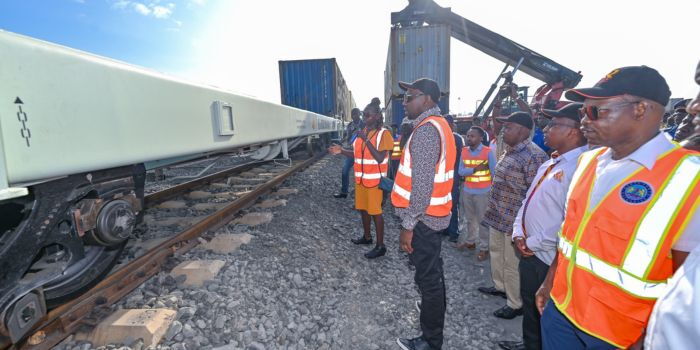
Despite aspirations for self-sufficiency, the SGR continues to struggle with financial viability, failing to cover its operational costs even after seven years of passenger and freight services, according to the report.
“The Committee noted that this implies the Standard Gauge Railway project is being subsidized by taxpayers, which indicates the project is struggling to break even six years after the operationalization of both passenger and freight services,” it stated.
Since its inception on May 31, 2017, the SGR has generated Ksh91 billion, transporting over 10 million passengers and 26 million tonnes of cargo by September 2023. However, the colossal Ksh380 billion project, financed by China, has yet to achieve profitability. The Africa Star Railway Operation Company has managed its operations under the regulation of Kenya Railways.
While Kenya aims for full operational control by 2025, concerns loom over China’s gradual relinquishment of project oversight. Recent developments suggest China has initiated the transfer of certain SGR operations, including security, to the Kenya Railways Corporation (KRC).
Critics argue that the transfer appears partial, raising suspicions of strategic information withholding to safeguard future projects. Notably, a Chinese corporation had sole operation rights until 2022, marking a shift in the project’s governance.
Economists have long branded the SGR as a ‘white elephant,’ epitomizing a project with disproportionate costs compared to its benefits. The recent report substantiates these claims, indicating an unlikely scenario of operational surpluses covering costs. The project’s inception was backed by ambitious cargo projections, notably 22 million tonnes annually, as per a 2014 parliamentary report by the Departmental Committee on Transport. However, actual cargo transportation since 2017 has fallen slightly above the projected figure, undermining the initial economic justifications.
Kenya’s financing approach for the SGR, predominantly through Chinese loans amounting to $5.08 billion (Ksh665.48 billion at today’s rate), has raised concerns. Loan repayments, commencing in January 2020 after a five-year grace period, now constitute a significant portion of the country’s external debt service outlay.
In January alone, SGR loan payments accounted for over 84 per cent of the total expenditure on external debt service, amounting to $637.02 million (Ksh100.6 billion).
Recent Comments