
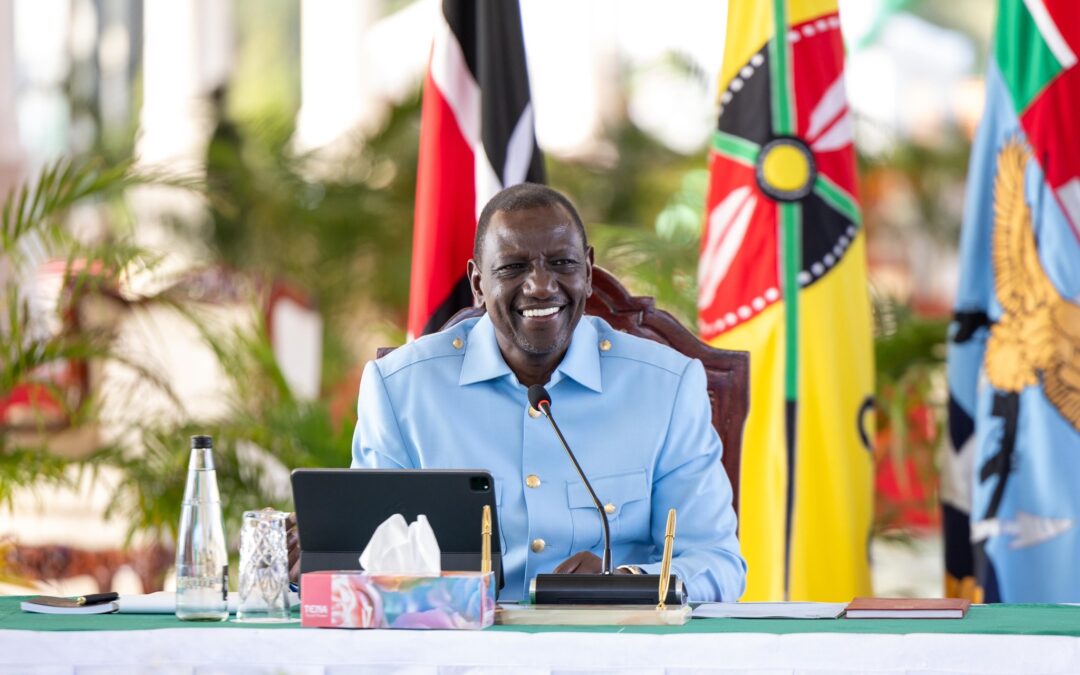
Meru County, June 13 – President William Ruto has announced an additional Ksh2 billion allocation for the dairy sector to support cooperatives and improve farmers’ access to credit. “We have demonstrated our commitment to supporting the dairy sector by allocating an additional Ksh2 billion. This funding will boost dairy cooperatives, ensuring they pay better prices promptly, and enhance farmers’ access to credit,” Ruto stated.
Speaking in Mitunguu, Meru County, where he laid the foundation stone for the Meru Maziwa Millers processing plant, Ruto highlighted the plant’s capacity to process 12,000 tonnes of milk monthly. Earlier this year, Ruto underscored his administration’s dedication to reforming the dairy sector to increase farmers’ earnings.
The government is also investing Ksh5 billion in modernising the New Kenya Co-operative Creameries (KCC) to enhance its efficiency in meeting farmers’ needs. “Our goal in bolstering KCC’s processing capacity is to ensure it handles the entire volume of milk produced by farmers,” Ruto said.
The President directed KCC to begin paying milk farmers Ksh50 per litre starting March 1, 2024, and to maintain consistent pricing. “From July 1, farmers will be paid every 15 days. This is how we will eliminate milk hawking, which arises when farmers are not paid for two to three months,” he said.
Additionally, the government will enhance farmers’ access to seasonal credit through the Agricultural Finance Corporation, which has been allocated Ksh10 billion for this purpose.
This increased funding follows the launch of the Kenya Dairy Sustainability Roadmap 2023-2032 by Agriculture Cabinet Secretary Mithika Linturi. The roadmap aims to leverage modern technology and climate-smart approaches to boost the dairy sector, with a goal of producing an additional 2.5 billion litres of high-quality milk annually.
“This roadmap signifies our deliberate shift towards modern farming, advanced research, increased financial support, and expanded trade opportunities, aligning perfectly with the Bottom-up Economic Transformation Agenda. It’s not just about meeting the growing demand for quality milk but also addressing challenges like declining production, import dependence, climate change, and empowering young farmers,” Linturi said optimistically.
Recent Comments